My Expertise
Grant Leigh Saunders is a Biripi - Worimi filmmaker, researcher and educator whose work sits at the intersection of documentary practice, Indigenous studies, Hip Hop culture, media production and culturally responsive education. With more than 20 years' experience in Aboriginal film and television production, he specialises in practice-based research that combines documentary filmmaking with Indigenous methodologies to investigate social justice, cultural identity, public pedagogy and community storytelling.
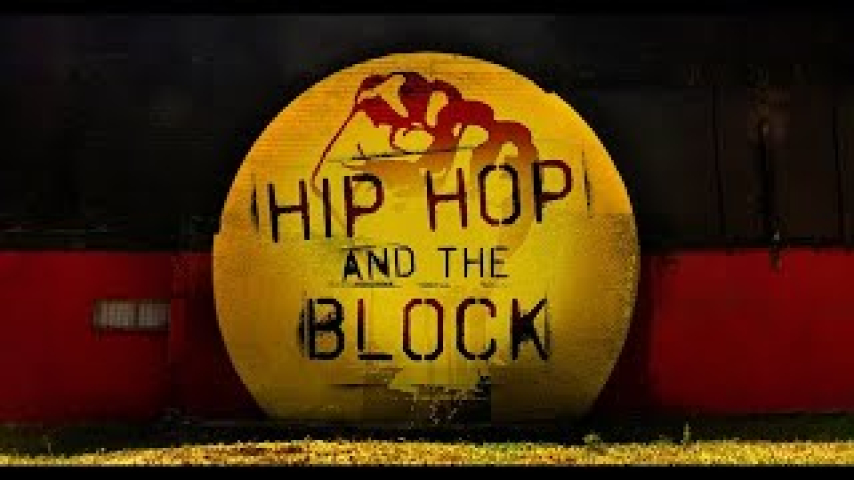
Grant's research explores how documentary and Hip Hop function as forms of Indigenous knowledge production and public pedagogy, with particular interests in Aboriginal Studies, creative arts research, Indigenous media representation, trauma-informed storytelling, and Hip Hop-Based Education. His doctoral research, JustUS: What Hip Hop Wants You to Know, employed Indigenous autoethnography, documentary practice and critical discourse analysis to examine Hip Hop as a site of cultural resistance, identity formation and social change. The accompanying feature documentary, Hip Hop and The Block, is a non-traditional research output investigating Aboriginal experiences of policing, gentrification, community resilience and artistic resistance.
Professionally, Grant has produced, directed and written more than twenty broadcast documentaries for ABC Television, NITV and the independent screen sector, documenting Aboriginal histories, cultures, arts, health, justice and community leadership. His work has received national and international recognition through film festival screenings, awards and academic publications.
His current research investigates Hip Hop-Based Education as a culturally responsive pedagogy for improving Aboriginal student engagement while enhancing non-Indigenous students' understanding of Aboriginal histories and cultures. Through interdisciplinary collaborations spanning education, media arts and Indigenous studies, Grant is developing evidence-based approaches that integrate lyric writing, music production, documentary filmmaking and critical media analysis into Australian classrooms.
Biography
Dr Grant Leigh Saunders is a filmmaker and Creative Research scholar who graduated from the Australian Film Television and Radio School with an MA (Honours) in Documentary. He produced over 20 documentaries (NTRO's) for ABC’s Message Stick, alongside music videos and short-form content. His online sketch comedy series ‘WhiteBlackAtcha’ led to an ABC commission for ‘Black Santa’ (2013). He later produced ‘A Flash Black? The Michael...view more
Dr Grant Leigh Saunders is a filmmaker and Creative Research scholar who graduated from the Australian Film Television and Radio School with an MA (Honours) in Documentary. He produced over 20 documentaries (NTRO's) for ABC’s Message Stick, alongside music videos and short-form content. His online sketch comedy series ‘WhiteBlackAtcha’ led to an ABC commission for ‘Black Santa’ (2013). He later produced ‘A Flash Black? The Michael McLeod Story’ (2016) for National Indigenous Television (NITV) and co-produced the feature documentary ‘Teach a Man to Fish’, a finalist for best documentary at both the Sydney International and Byron Bay International Film festivals and commissioned for NITV in 2018. His traditional research publications include the first edited volume on Hip Hop cultures in Australia, titled: ‘Representing Hip Hop Histories, Politics and Practices in Australia’. Saunders holds a Doctor of Creative Arts from the University of Technology Sydney and is currently lecturing in Indigenous Studies at Nura Gili at the University of New South Wales
My Qualifications
Educational Qualifications:
2017 - 2021
Doctor of Creative Arts (Arts and Social Sciences)– University of Technology Sydney (UTS) Field: Indigenous auto-ethnography, Practice-based research
Supervisors: Distinguished Prof. Larissa Behrendt, Dr Timothy Laurie
Feature Documentary: Hip Hop and The Block https://documentaryaustralia.com.au/project/justus-hip-hop-and-the-block/
Exegesis title: “JustUS: What Hip Hop Wants You to Know” https://opus.lib.uts.edu.au/handle/10453/149456
2004-2006
MA (Honours) Film and TV Documentary – Australian Film, TV and Radio School (AFTRS)
Field: Documentary film and TV Production, Indigenous auto-ethnography, Practice-based research
Supervisors: Dr Mitzi Goldman, Dr Ben Goldsmith
Film and Thesis title: “B.L.A.C.K. An Indigenous Song of Hip Hop” https://vimeo.com/59720608
My Awards
Awards and Festivals
2018 - 2021- Recipient of UTS Research Excellence and Jumbunna IHL Scholarships to undertake Doctor of Creative Arts degree, UTS
2018 - Official selection Sydney Film Festival for “Teach a Man to Fish”, NITV.
- Official Selection Byron Bay International Film Festival, “Teach a Man to Fish”, NITV.
2012 - Official Selection for Nepal International Indigenous Film Festival for 'In the Frame: Alison Page', ABC.
2010 - Indigenous Excellence Staff Scholarship Award, ABC.
- Finalist for UN Media Peace Awards for ‘We the Problem, We the Solution’, ABC.
- Official Selection Yalingup Surf Film Festival for ‘Black Beach’, Independent.
2008 - Inaugural John Newfong Media Award for ‘Freakshow to Big Top’, ABC.
2007 - Best Indigenous film, St Kilda Film Festival, ‘B.L.A.C.K.: An Aboriginal Song of Hip Hop’
2006 - Pan African Film Festival, ‘B.L.A.C.K.: An Aboriginal Song of Hip Hop’
- European Union Award, Marseilles France, ‘B.L.A.C.K.: An Aboriginal Song of Hip Hop’
- Audience Choice Award, Riddu Riddu Sami Film and Music Festival, Norway, ‘B.L.A.C.K.: An Aboriginal Song of Hip Hop’
- Harlem Curated Film Festival, USA, ‘B.L.A.C.K.: An Aboriginal Song of Hip Hop’
My Research Supervision
Supervision keywords
Areas of supervision
Practice-based research; creative research; Indigenous studies; Arts and Social sciences; Indigenous-led research; Indigenous political and social histories
My Teaching
I will begin teaching in T3, 2026 in the subject ATSI2003 'Reclaiming Material Culture' for Nura Gili. More information can be found here: https://handbook.unsw.edu.au/undergraduate/courses/2026/atsi2003.
The focus of this course is on the role of museums and art galleries in the representation of Indigenous peoples and their cultures. The course begins with an introduction to Indigenous material culture, in both pre-contact and contact Australia. Students will also learn about the collection, study and display of Indigenous objects by museums and galleries. In this context disciplines of anthropology, ethnography, archaeology and museology are examined. Particular attention is given to the ways in which we can study objects and their different meanings as they journey from Indigenous contexts to non-Indigenous institutions. Students undertake an excursion to one or more local museums and participate in interactive seminar discussion as part of this course.
Location
Contact
Publications
ORCID as entered in ROS
 https://orcid.org/0000-0003-4368-6535
Videos
[more information about the social impact plan and how to support can be found here: https://documentaryaustralia.com.au/project/justus-hip-hop-and-the-block/]
Logline: After the demolition and gentrification of Sydney's infamous "black ghetto", a young Aboriginal rapper, Sonboy, remembers the heart and soul of The Block Redfern.
Synopsis: This long awaited Australian film is about the social justice issues facing Aboriginal communities in Australia imagined through the lens of First Nations Hip Hop. The film follows the journey of Sonboy, a young Aboriginal rapper from The Block in Redfern, once the black political and cultural heart of Sydney. Through a rich historical archive of Redfern and the lyrics of one of its children, this hybrid of essay and observational documentary film invites the audience into a place once feared and loathed by outsiders but loved and now mourned by generations of First Nations and Culturally and Racially Marginalised families originally drawn from communities all around Australia with an old dream to make it in the big city. The Block was purchased to socially house poor and working-class Aboriginal families through a grant by the Whitlam Government in 1973 to the Aboriginal Housing Company. It became the home of the Aboriginal community-controlled sector with the establishment of the first Aboriginal Medical Service, Legal Service, Black Theatre, Radio Redfern, Aboriginal Dance Theatre and it was the epicentre of black activism, where many protests took place including the infamous Redfern Uprising in 2004. Under decades of public pressure from police harassment, a powerful lobby group of middle-class white landlords with an appetite for better property prices on top of covertly planned obsolescence, The Block finally crumbled, eaten up by private developers for the development of student housing, a new business district and “affordable housing” for successful First Nations family applicants, without a criminal record. In the rubble of his disintegrating Hood, Sonboy produces his first EP at the local community centre, simply titled ‘Kid from The Block’. This film is about what this recording has to say about Australian colonialism and its last frontier, the “black heart of Sydney” or Sydney’s “black ghetto”, The Block Redfern.
The full film can be downloaded from the Ronin Films Website here: https://www.roninfilms.com.au/feature/15771/teach-man-fish.html
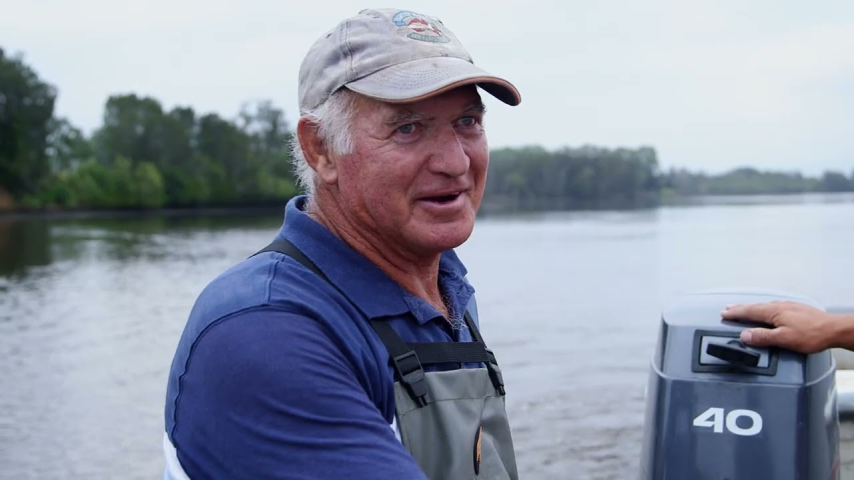
Grant Leigh Saunders is an Aboriginal filmmaker, writer and musician who has secretly always wanted to be a fisherman, just like his father and grandfather before him. This fishing yarn is set against the backdrop of the beautiful Manning River in central New South Wales.
Despite his promising artistic career, Grant is unsettled and feels there is something missing in his life. As a fair-skinned, middle-aged, Aboriginal man, with a Norwegian wife and two young "Koori-Wegian" kids, Grant is struggling with his identity. Compounding this feeling is that Grant has been away from his home country of Taree for over twenty years.
When Grant's uncle Steve, his father's main fishing partner, decides to quit fishing, Grant latches onto the opportunity to quit everything to go fishing with his father. On the eve of his Dad's retirement, he convinces him to pass on the family trade, and leaves his family in Newcastle through the working week to pursue his dream to be a fisherman in his home country on the beautiful Manning River of Taree. It is an opportunity for him to spend time with his father to hopefully salvage a relationship he spoiled sometime ago.
As Grant asks more questions of his father we learn that there is infinitely more to this father and son fishing trip than learning how to just catch fish. Throughout Grant's journey, the push and pull between his life in Newcastle with his wife and kids and his reconnection with his family up north in Taree, leads Grant to make some big life-changing decisions.
A dramatic family history, fishing, politics, singing, laughter and tears, this fishing yarn has it all, told by some very colourful characters.
FINALIST, Australian Documentary Prize, Sydney Film Festival